
Stronger Together – Unity at Phoenix House as Small Business Commissioner Meets ATMF & Leicester Manufacturers
On 12th February 2026, Phoenix House became the focal point for a landmark meeting bringing together Leicester’s textile manufacturers, policymakers and national representatives to discuss the future of UK garment production.
Hosted by the Apparel and Textile Manufacturers Federation (ATMF) in collaboration with Fashion-Enter Ltd (FEL), the session welcomed representatives from the Office of the Small Business Commissioner and the Department for Business & Trade (DBT), alongside 15 Leicester-based manufacturers and sector leaders.
Chaired by Jenny Holloway, CEO of FEL and Chair of ATMF, the central question driving discussion was clear:
How can policymakers better support SMEs in UK manufacturing?
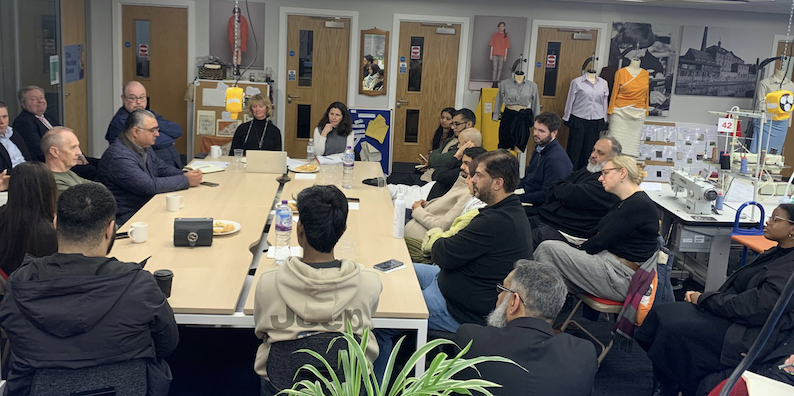
Leicester’s Strength: A Fully Integrated Cluster
The meeting opened with a powerful reminder: Leicester remains one of the UK’s only truly vertically integrated textile clusters.
Within the city, manufacturers offer:
- Fabric supply and printing
- Cutting and garment manufacture
- Embellishment and finishing
- Sampling and product development
- Fast-response production within 5–10 working days
Many businesses are generational, family-run enterprises with decades of technical expertise. Since the intense scrutiny of the COVID period, factories have significantly strengthened compliance, transparency and ethical standards.
However, despite the progress, reputational damage still lingers. Retailers may express interest in reshoring production, but internal risk concerns and price pressures often result in continued overseas sourcing. The contradiction remains: buyers demand speed and agility, yet hesitate to commit to local manufacturing.
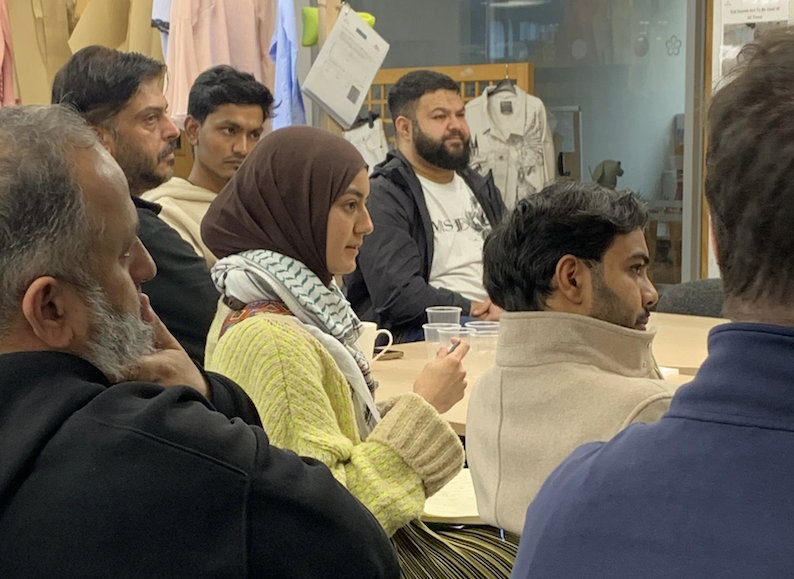
Late Payments: A System Under Strain
A major focus of the discussion was late payment and financial instability.
Manufacturers reported:
- 30-, 60- and 90-day payment terms
- Retrospective discounts imposed months after delivery
- Threats of account closure if discounts are refused
- Brands effectively using factories as informal “banks”
The Small Business Commissioner outlined support mechanisms for SMEs with fewer than 50 employees and confirmed that the Insolvency Service can investigate suspected director misconduct.
Government is currently reviewing:
- A proposed 60-day maximum payment term
- Stronger enforcement against habitual late payers
- A 30-day invoice dispute rule
For Leicester manufacturers, this is about more than cashflow — it is about fairness, stability and restoring balance to supply chains.
Public Procurement: Unlocking the £400bn Opportunity
The strongest alignment in the room centred on public procurement.
With over £400 billion spent annually through public contracts, even a small percentage allocated to UK garment manufacturing would be transformative.
The discussion referenced the Public Procurement Act 2023, which introduces greater transparency and enables proximity sourcing. Notably, government departments typically pay 95% of undisputed invoices within 10 days, a stark contrast to many private sector arrangements.
However, structural barriers remain:
- Large bundled contracts
- High balance sheet thresholds
- Complex tender writing
- Short four-week submission windows
Breaking contracts into smaller “lots” or sub-assembly models could significantly increase SME participation. Social value, now a core evaluation factor, also strongly favours Leicester’s generational businesses and local employment impact.
Security concerns were raised regarding military uniforms manufactured overseas, including in China. Participants highlighted risks linked to advanced textile technologies and argued for domestic production on national security grounds. Correspondence between Lord Young of Norwood Green and Lord Coaker on this matter is ongoing.
A United Approach: The Proposed Sector-Wide LLP

One of the most constructive outcomes was agreement in principle to explore creating a sector-wide Limited Liability Partnership (LLP).
The proposed model would:
- Combine balance sheets
- Strengthen financial eligibility
- Enable collective bidding
- Centralise tender writing
- Maintain independent factory operations
Under this structure, ATMF would act as a transparent coordinating federation, preventing undercutting and standardising ethical pricing and production standards.
The development of a Leicester “Mark of Excellence” alongside a proposed UK-first ‘We Trust’ kite mark for ethical factories was also discussed. Funding from the Garment & Textile Workers Trust will support this initiative, creating greater transparency for factories seeking public contracts.
Policy, Sustainability and the 3–5% UK Production Ambition
Manufacturers strongly advocated for retail brands to commit to producing 3–5% of ranges in the UK.
While government cannot dictate private sourcing decisions, public procurement contracts awarded domestically would provide confidence to the private sector.
New sustainability regulations under the EU’s Ecodesign for Sustainable Products Regulation (ESPR) including Digital Product Passports and restrictions on destroying unsold garments may further strengthen the case for smaller, closer-to-market UK production runs.
These regulatory shifts, combined with waste reduction policies, could mark a turning point for British manufacturing competitiveness.
Looking Ahead: Leicester Made – 24th & 25th April
Momentum now builds towards the forthcoming Leicester Made & Regions event on 24th & 25th April.
ATMF has requested introductions to MOD procurement officials, Crown representatives and DBT contacts. Government attendees committed to facilitating connections with appropriate bodies.
What is needed now is fair access to contracts, prompt payment and policy frameworks that recognise the strategic importance of domestic manufacturing.
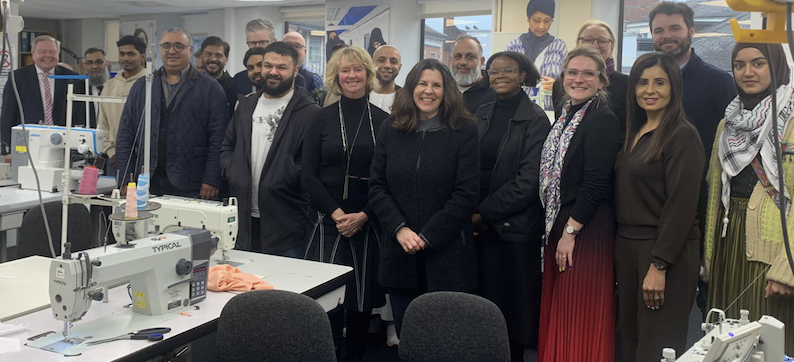
Jenny Holloway: “It’s Time for Leicester to Stand Tall”
Following the meeting, Jenny Holloway commented: “I can’t express how proud I was today to represent the manufacturers, suppliers and designers from Leicester. It’s time for Leicester to stand tall and proud.
“Manufacturing is a highly skilled business and listening to the earnest contributions from these business leaders was utterly rewarding as Chair of the ATMF.
“There are huge opportunities for the Labour government to fully engage with small businesses to fulfil public procurement contracts and reduce worklessness.
“The ATMF can be a crucial transparent body to support the award of contracts to the right factories – a critical friend to the public sector.
“This meeting coincided with the Westminster debate tabled by Catherine West MP on UK onshoring. Now we need action.”
Book your tickets for Leicester Made and Regions 2026 now!
24th April 2026 at The Venue, Leicester.