
A Visit to The Leather Conservation Centre at Canopy Leicester
A recent visit by leadership from Fashion-Enter Ltd (FEL) and the ATMF to the newly relocated The Leather Conservation Centre (LCC) has opened the door to exciting opportunities for collaboration in training, education and apprenticeships within the specialist field of leather.
Now based at Canopy, part of LCB Depot on King Street in Leicester, the Leather Conservation Centre is entering a new phase of growth and visibility. The move to this vibrant creative hub positions the organisation to expand both its conservation work and its engagement with industry, education providers and the wider community.
 As a charitable organisation, LCC is dedicated to the preservation of historic leather and related materials through three core pillars: conservation, education, and research. At the heart of its operations is an ICON-accredited conservation studio, which undertakes highly specialised projects for a diverse range of clients, from cultural institutions to private collectors. The new facility enables the team to scale up its work while strengthening connections across the sector.
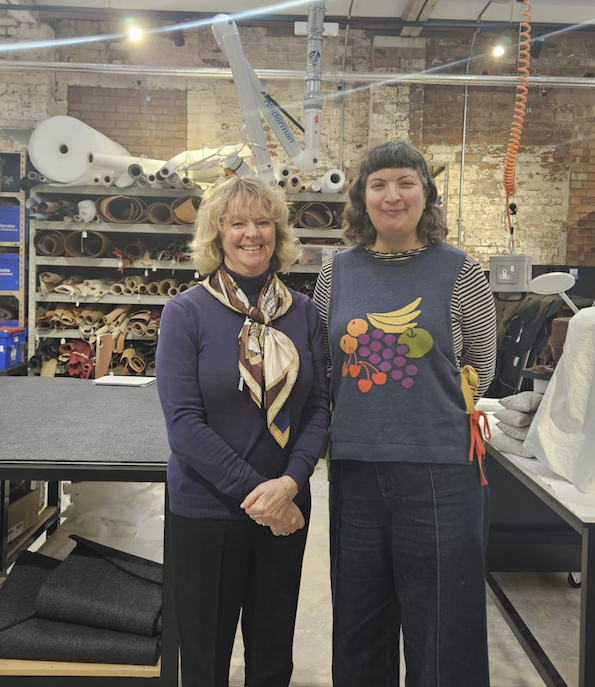
During the visit, FEL’s CEO and ATMF Chair, Jenny Holloway (pictured with Rosie Bolton right), along with Operational Manager, Divya Kamath, were given an in-depth look at the Centre’s work, which sits at the unique intersection of chemistry, craft, and technology. Discussions focused on the potential for collaborative initiatives, particularly around skills development and apprenticeship pathways – areas that are increasingly vital as the UK looks to rebuild and future proof its manufacturing and heritage skills base.
The Leather Conservation Centre is not only preserving artefacts but also safeguarding endangered traditional processes such as alum tawing, oil tanning and specialised forms of vegetable tanning. In addition, the organisation is advancing research into modern leather manufacturing techniques, addressing a significant gap in knowledge around post-20th century processes. This dual focus, honouring heritage while embracing innovation, positions LCC as a critical resource for both the conservation field and the wider leather industry.
A key strength of the organisation lies in its growing network, which spans historic craftsmanship, contemporary practice and cutting-edge research. This collaborative ecosystem fosters knowledge exchange and problem-solving, helping to address current challenges within leather conservation and production.
Support from industry bodies such as the Society of Leather Technologists and Chemists (SLTC), which has provided access to valuable research resources and is actively collaborating on new initiatives, further strengthens LCC’s impact and reach.
The visit by FEL and ATMF signals a shared recognition of the importance of specialist skills and innovation within the UK’s fashion and textile landscape. By exploring opportunities for joint training programmes and apprenticeships, the organisations are taking meaningful steps toward nurturing the next generation of talent while preserving vital heritage skills.
As the Leather Conservation Centre settles into its new home, partnerships like these will play a crucial role in values that combine the regions past with its future.