
Onshoring in the Fashion and Textiles Industry Debated By MP’s in Westminster
A Westminster Hall debate, Thursday 12th February 2026, placed the future of British fashion manufacturing firmly on the political agenda, as MPs from across the House examined how onshoring could revitalise the UK’s fashion and textiles sector. Led by Catherine West MP, the discussion ranged from procurement reform and ethical supply chains to skills, technology, and the role of clusters such as Leicester. Key contributions referenced industry leaders and organisations including Fashion-Enter Ltd, community anchor Wesley Hall and longstanding campaigner Baroness Lola Young.
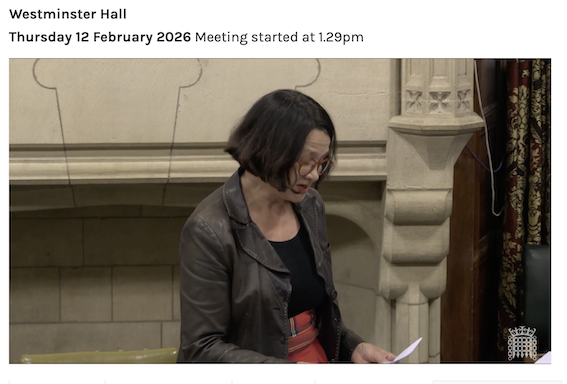
(MP Catherine West from Parliamentlive.tv)
A Call for an Inclusive and Ethical Economy
Opening the debate, Catherine West framed onshoring not as nostalgia, but as a practical economic strategy aligned with Labour values of an inclusive economy. She highlighted the UK’s historic global reputation for craftsmanship, from Yorkshire wool to Savile Row tailoring, and stressed that the sector still underpins 200,000 jobs in London alone.
The core argument was economic as well as ethical. Onshoring, she argued, could unlock £3.1 billion in GDP, create 64,000 jobs, and generate £1.2 billion in tax receipts. With services exports outperforming goods, revitalising domestic manufacturing could help rebalance trade.
Central to her case was the Procurement Act 2023, which enables public bodies to prioritise ethical and local sourcing. West stated that procurement must go beyond “pounds, shillings and pence” and consider community benefit. Uniform contracts, from prisons to the armed forces, were cited as immediate opportunities. Despite Britain’s technical expertise in camouflage fabrics, only 6% of UK military uniforms were reportedly made domestically.
West also pressed for:
- Investment in training and apprenticeships, including fully funded places for under-25s in SMEs.
- Support for capital expenditure and R&D.
- Consideration of a “fashion watchdog” to protect small manufacturers from exploitative purchasing practices.
- Stronger action against greenwashing and opaque supply chains.
She emphasised that “Made in the UK under fair conditions” should become a mark of pride and competitive advantage, particularly under strengthened employment rights legislation.
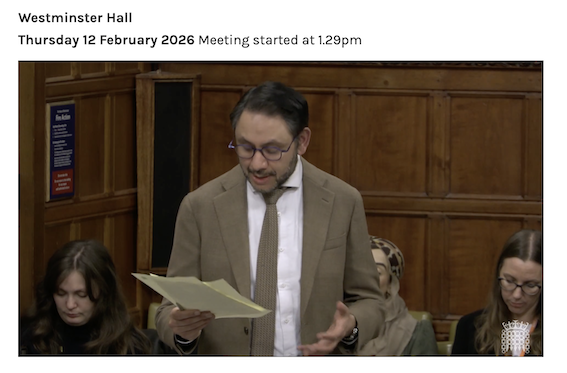
Leicester: Heritage, Capacity and Reform
The most detailed regional case came from Shockat Adam, MP for Leicester South, who painted a vivid picture of a city once known for clothing the world. At its peak, Leicester had more than 1,500 factories and was among Europe’s wealthiest cities. Today, around 11,000 jobs remain in the sector, and the city retains full end-to-end garment production capability.
Adam made a powerful economic case: garment manufacturing accounts for just 2% of the UK’s £25.6 billion textile sector, yet public procurement contracts, including an £80 million annual army clothing budget and a £125 million NHS uniform framework, continue to flow overseas.
He argued that:
- The capacity and skills exist domestically.
- Onshoring makes strategic sense for national security and resilience.
- The environmental case is compelling, reducing carbon miles and improving oversight.
- Flexible manufacturing roles are particularly valuable for women re-entering the workforce.
Addressing past reputational damage following allegations of labour exploitation, Adam acknowledged non-compliance had occurred but noted that enforcement bodies found no prosecutable modern slavery offences after review. He insisted that the majority of Leicester factories are ethical, skilled and hard working, and deserve recognition rather than stigma.
Adam also advocated for structural reform: a garment trading adjudicator modelled on the Groceries Code Adjudicator, to address unfair risk transfer from brands to manufacturers. Research presented at industry events showed suppliers frequently pay for audits without guaranteed future orders, while facing shortened lead times and late payments.
Fashion-Enter and Skills in Action
A highlight of the debate was the explicit recognition of practical, on-the-ground initiatives. Adam referenced visiting trainees at Fashion-Enter’s Leicester site alongside CEO Jenny Holloway. He described seeing “firsthand the appetite for skilled, ethical production,” positioning the organisation as proof that transparent, compliant, UK-based manufacturing is viable at scale.
Fashion-Enter has been vocal in advocating procurement reform and cluster development. In the debate, its work was framed not as theory but as operational evidence: ethical factories, real trainees, and clear pathways into employment.
Community organisations were also acknowledged. Wesley Hall and the Shama Women’s Centre were cited as providing sewing classes that create employment pathways for disadvantaged women, reinforcing the social dimension of onshoring.
The concept of “cluster” development emerged repeatedly, with calls for competitive regional supply chains supported by a national manufacturing director and a clearer “Made in UK” trademark standard.
Technology, Innovation and Lifecycle Thinking
Technology was another major theme. West welcomed Susan Postlethwaite, Professor of Fashion Technologies at the Manchester Fashion Institute and her work on automation in garment manufacturing. Agile, small-scale, tech-enabled production was presented as a route to competitiveness, combining robotics with redesigned fashion education.
Environmental considerations extended beyond carbon miles. MPs stressed the importance of evaluating the full lifecycle of garments. Textile recyclers have struggled with declining recycling rates due to low-quality fast fashion imports. Onshoring, it was argued, would enable better material standards and support a circular economy built on reuse and regeneration.
Calls were made to incentivise deadstock reuse and penalise excessive packaging waste, particularly in relation to ultra-low-cost overseas retailers.
Cross-Party Support and Government Response
Liberal Democrat spokesperson Sarah Olney underscored the urgency of reducing pollution and improving labour standards, noting that less than 3% of clothing worn in the UK is made domestically. She highlighted knitwear as an area where the UK competes on quality and speed rather than price.
Minister of State at the Department for Business and Trade, Chris Bryant responded with a mix of enthusiasm and caution. Referencing the departure of Burberry from his constituency, he acknowledged the sector’s challenges. He confirmed:
- £4.3 billion in manufacturing support over five years, including £2.8 billion for R&D.
- Continued backing for London Fashion Week and emerging designers.
- A forthcoming responsible business conduct review aimed at effective, proportionate regulation.
- Willingness to examine uniform procurement across departments.
Bryant emphasised frictionless trade with the EU as essential for export growth, and recognised the need to ensure ethical businesses are not undercut by unfair global practices.
A New Direction for British Fashion
The debate closed with Catherine West thanking campaigners and organisations including Fashion Roundtable, Fashion-Enter, and Baroness Lola Young for their sustained advocacy.
Across parties, a new narrative emerged: one that positions UK fashion not as a relic of the past but as a future-facing industry built on innovation, clean growth, ethical standards and regional regeneration. The message from Westminster Hall was clear – onshoring is not protectionism, but strategic resilience.
For Leicester and the UK fashion and textile manufacturing sector seeking a level playing field, the debate marked a significant moment. Whether it translates into procurement mandates and structural reform now depends on government action.
The Debate Featured With An Interview at FEL On BBC Radio 4

(Jenny and designer Jo Jacobs being interviewed at the FEL factory by BBC Radio 4)
The following day, 13th February, BBC Radio 4’s flagship programme Today in Parliament featured a report on the onshoring discussion by parliamentary correspondent Susan Hulme. The broadcast moved from the House of Commons to the north London factory of Fashion-Enter Ltd (FEL), where CEO Jenny Holloway outlined a model built on ethical production, small-to-medium manufacturing runs, and skills training. Alongside producing up to 5,000 garments per order for independent designers and major retailers, FEL operates a training academy and repair centre, counting brands such as Patagonia and Lululemon among its clients. Holloway noted that although the factory produced 30,000 garments a week pre-pandemic and pivoted to PPE during COVID-19, much of that emergency sourcing later returned overseas.
At the heart of the debate is cost: with UK wages far exceeding those in countries such as Bangladesh, competing on price alone is difficult. However, Holloway and Labour MP Catherine West argued that government procurement, worth over £400 billion annually, could help rebuild domestic capacity, particularly in areas like military uniforms, as seen in the United States. Conservative MP Rebecca Paul cited energy, tax and regulatory pressures but said British firms can compete on quality and speed, while minister Chris Bryant expressed interest in exploring the proposal. The discussion reflects a wider crossroads for UK textiles: balancing global cost pressures against ethical production, sustainability, skills preservation and national resilience.
This interview is available to listen to on BBC Sounds, tap here – until 15th March 2026
Book your tickets for Leicester Made and Regions 2026 now!
24th April 2026 at The Venue, Leicester.